

In the Nordic region, many people live far from hospitals, often hours away. Aging populations and geographic isolation make healthcare reactive rather than preventive. By the time help arrives, it is usually too late.
Apollo reimagines this landscape. It envisions a shared healthcare ecosystem where technology bridges distance, strengthens trust, and helps communities care for one another before crises emerge.


Current systems prioritize treatment over prevention. Data lives in silos, consent is abstract, and relationships between people and healthcare providers are distant. Patients feel unseen, and doctors feel overloaded.
These insights showed that trust is relational, not just technical. It must serve both sides of the healthcare equation.


Apollo was built around a mutual trust framework, ensuring value for both citizens and healthcare professionals.

Apollo is an AI-integrated preventive healthcare system designed for remote communities. It creates a loop of shared awareness and benefit between people and providers.

.gif)
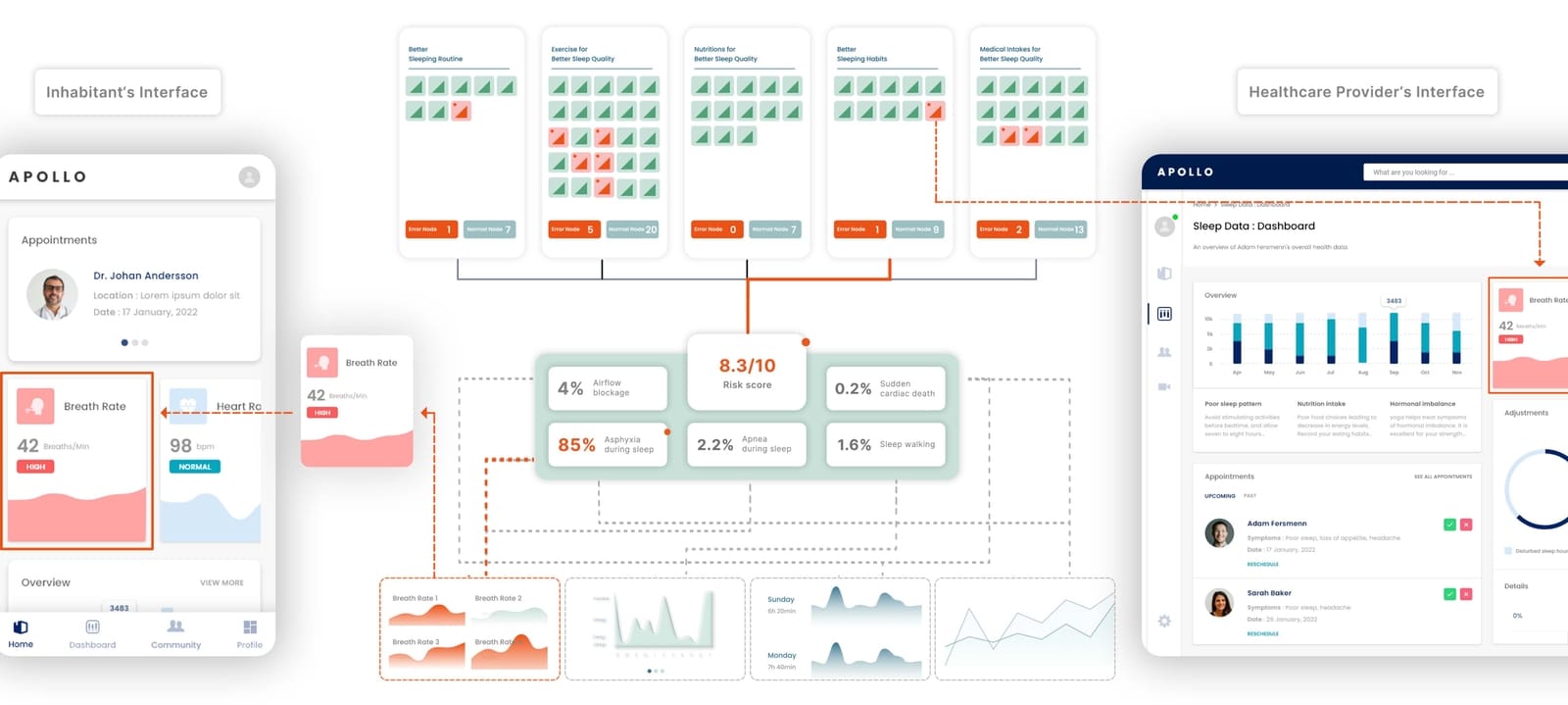


Apollo turns healthcare into a mutual care system where people share data to enhance public wellbeing & professionals use those insights to deliver more responsive, compassionate care.
Apollo demonstrates how design can balance empathy and efficiency. It shows that when data exchange is built on transparency, both patients and providers gain:

Greater control, early insight, and a sense of partnership in their health.
Reliable data, reduced workload, and deeper trust from communities.
• Led UX research and ecosystem mapping for rural and preventive healthcare contexts
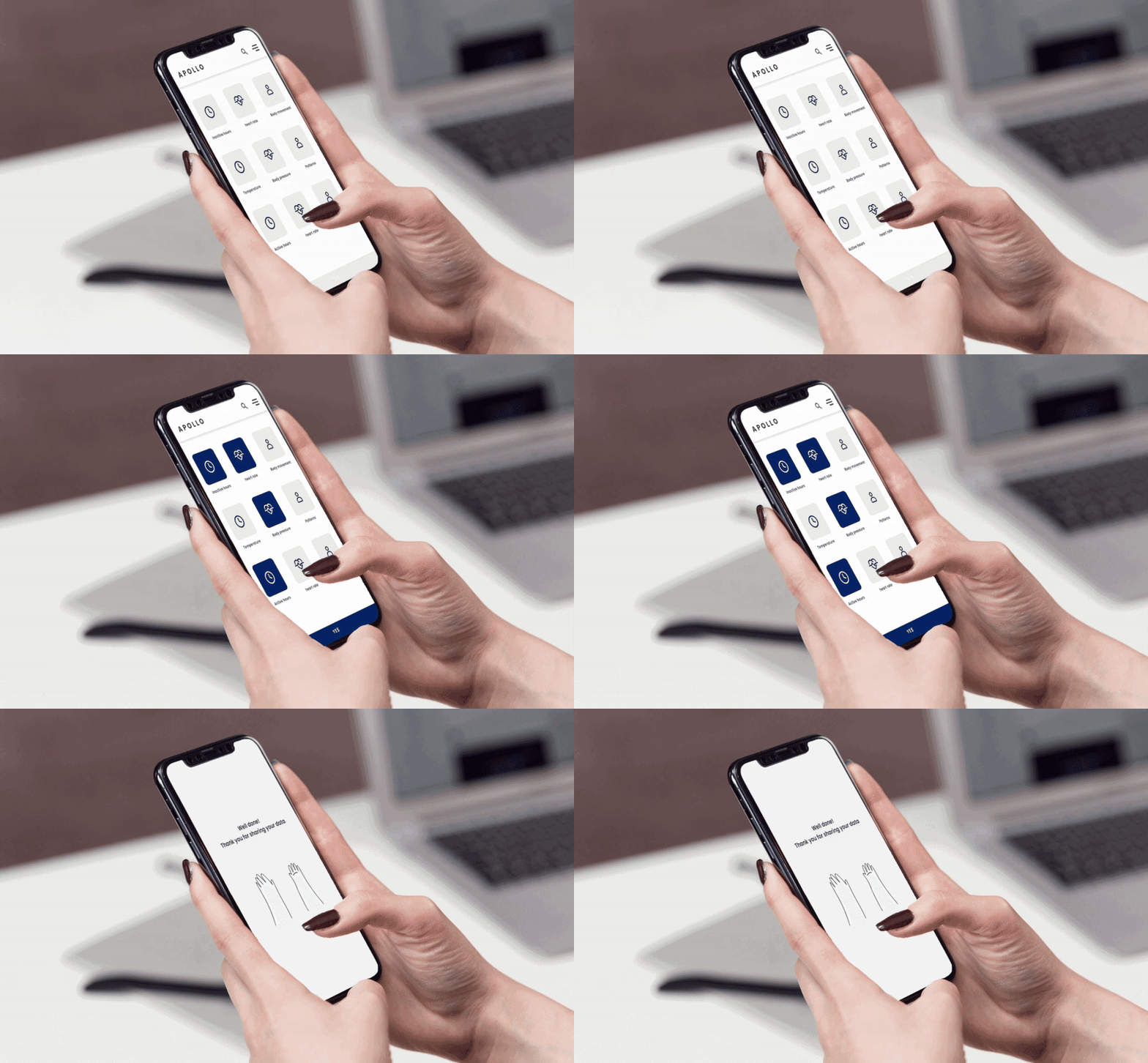
• Defined the interaction model connecting citizens, AI, and medical providers
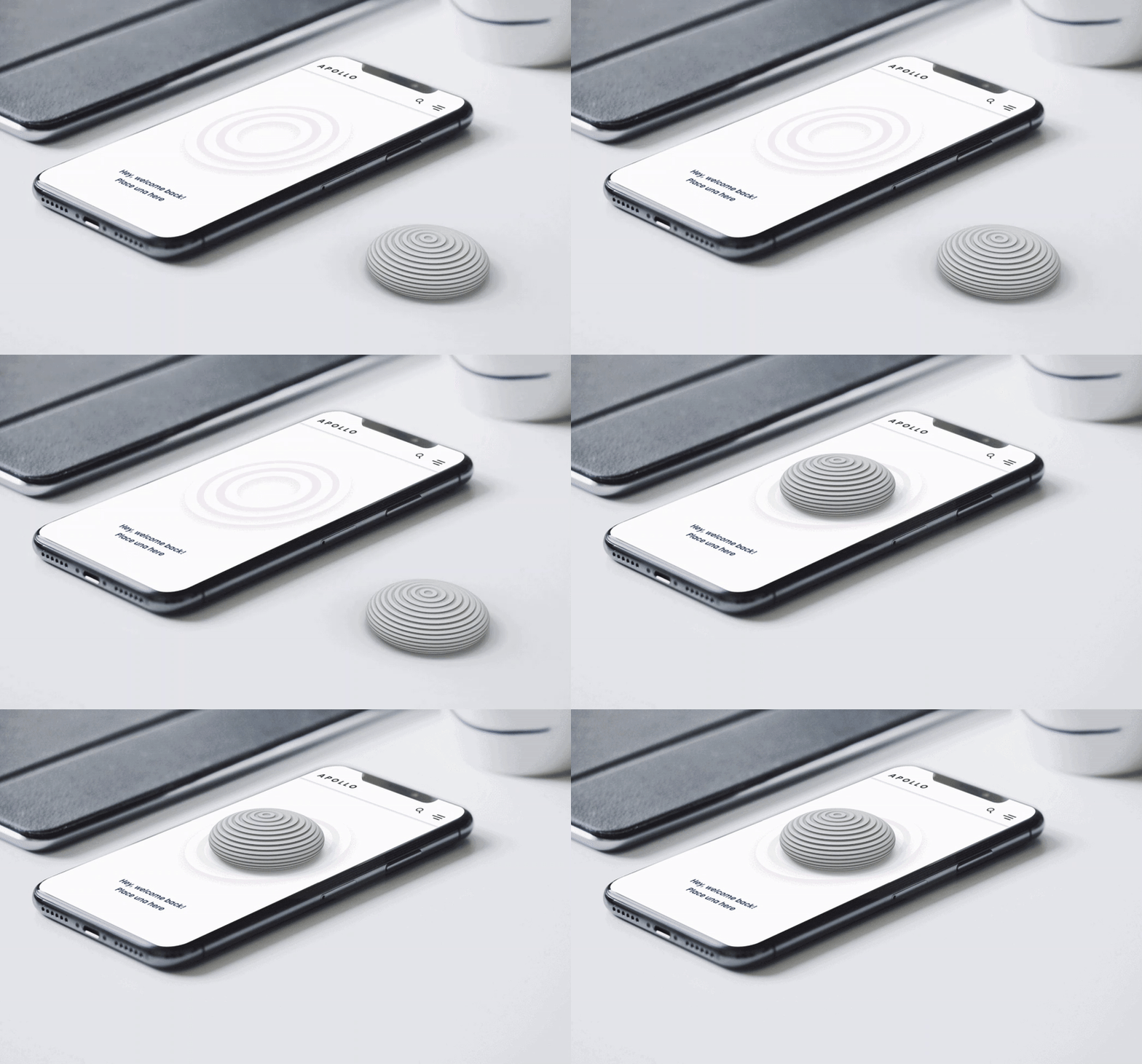
• Designed key touchpoints including Apollo Mat and Una, the physical data token for ethical data sharing
• Collaborated with healthcare professionals, service designers, and local communities across the Nordic region
This was not just a digital design problem; it required designing systems of trust, consent, and collaboration across human
and institutional boundaries.
Designing Apollo taught me that data systems are emotional systems. Every consent, alert, or insight carries a story of trust.
This project deepened my belief that ethical design is not only about privacy but about reciprocity. Apollo’s strength lies in
how both sides grow stronger together: citizens gain agency, and healthcare providers regain human connection.